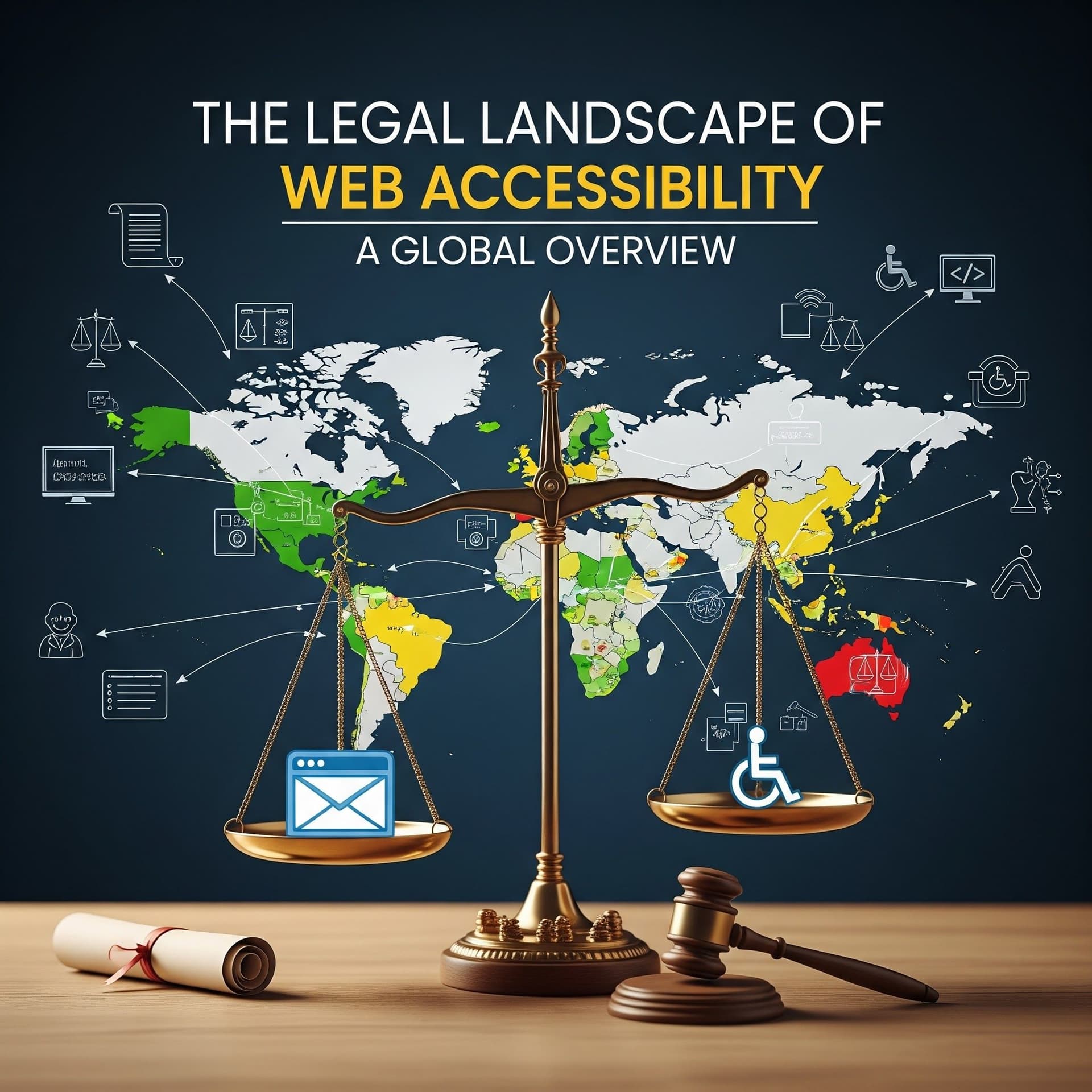
The Legal Landscape of Web Accessibility: A Global Overview
Introduction
The internet has become the gateway to information, services, and commerce. But for millions of people with disabilities, many websites still create barriers instead of opportunities. Web accessibility ensures that everyone—regardless of ability—can perceive, understand, and interact with online content.
Accessibility is not just good practice; it’s the law. Around the world, governments are enacting legislation, setting standards, and enforcing penalties to ensure digital inclusion. This guide explores the global legal landscape of web accessibility, what it means for organizations, and how businesses can stay compliant while creating better user experiences.
The Global Legal Framework for Web Accessibility
United States
- Key Laws: Americans with Disabilities Act (ADA), Section 508 of the Rehabilitation Act, 21st Century Communications and Video Accessibility Act (CVAA).
- Standards: Websites and mobile apps are generally expected to comply with WCAG 2.1 AA
- Trends: Increasing lawsuits under ADA Title III. DOJ finalized rules in 2024 clarifying WCAG 2.1 AA as the standard for state and local governments.
European Union
- Key Laws: EU Web Accessibility Directive, European Accessibility Act (EAA).
- Standards: EN 301 549, harmonized with WCAG 2.1 AA.
- Trends: The 2025 EAA deadline expands obligations beyond the public sector to cover private services like e-commerce and transport.
Canada
- Key Laws: Accessible Canada Act (ACA), Accessibility for Ontarians with Disabilities Act (AODA).
- Standards: WCAG 2.0/2.1 AA compliance for government and many private organizations.
- Trends: More provinces are adopting stricter rules; organizations must publish accessibility statements.
Australia
- Key Law: Disability Discrimination Act (DDA).
- Standards: WCAG referenced as benchmark for compliance.
- Trends: Growing litigation risk and pressure to proactively build accessibility into design.
United Kingdom
- Key Laws: Equality Act 2010, Accessibility Regulations 2018.
- Standards: WCAG 2.1 AA for public sector sites and apps.
- Trends: Enforcement via accessibility statements and regulatory action.
Other Regions
- India: Rights of Persons with Disabilities Act, 2016.
- Israel: Equal Rights for Persons with Disabilities Law.
- Global Trend: WCAG increasingly adopted as the de facto global standard.
Common Standards
- WCAG (Web Content Accessibility Guidelines) – the backbone of most global accessibility laws.
- EN 301 549 – specific ICT accessibility requirements for the EU.
- Reasonable Accommodation Clauses – many laws also require flexible adjustments beyond technical criteria.
Recent Global Trends
- Clearer regulations (DOJ rules in the U.S., EAA in EU).
- Rising litigation risk, especially in North America.
- Greater emphasis on manual testing and accessibility statements.
- Inclusion of mobile apps, PDFs, and third-party tools in compliance scope.
Challenges for Organizations
- Varying laws across regions.
- Updating legacy systems.
- Managing accessibility in third-party integrations.
- Keeping pace with evolving WCAG standards.
Best Practices for Compliance
- Adopt WCAG 2.1 AA (or higher) as baseline.
- Conduct regular accessibility audits (manual + automated).
- Publish an accessibility statement with contact information.
- Train staff on accessibility requirements.
- Monitor global legal updates to stay ahead of enforcement.
WebAbility’s Best Tools for Compliance
At WebAbility, we help organizations simplify accessibility with tools and services such as:
- Automated Accessibility Scans – catch common WCAG issues instantly.
- Manual Audit Services – expert testing for real-world usability.
- Accessibility Monitoring Dashboard – track compliance over time.
- Remediation Support – clear guidance and fixes for developers.
Visit WebAbility to learn more about how our solutions keep you compliant worldwide.
Conclusion
Web accessibility is both a legal requirement and a moral responsibility. From the ADA in the U.S. to the European Accessibility Act and beyond, governments are raising the bar for digital inclusion. Organizations that act early not only avoid legal risk but also expand their customer base and build stronger brands.
By aligning with WCAG standards, leveraging tools like those offered by WebAbility, and embedding accessibility into digital strategy, businesses can ensure their websites and apps are inclusive, compliant, and future-ready.
FAQs
Q1: What is WCAG, and why is it important?
WCAG (Web Content Accessibility Guidelines) provide the technical framework for making websites usable by people with disabilities. Most global laws reference WCAG, especially Level AA.
Q2: Do these laws apply to private businesses?
Yes. Many jurisdictions apply accessibility requirements to both public and private sector organizations.
Q3: What happens if I ignore accessibility requirements?
You risk lawsuits, fines, forced remediation, reputational damage, and customer loss.
Q4: How do I know which laws apply to me?
Check your location and service market. If you operate globally, follow the strictest applicable standard (WCAG 2.1 AA is a safe baseline).
Q5: How can WebAbility help?
WebAbility offers accessibility audits, monitoring tools, and remediation services to help your website meet compliance and deliver better user experiences.
Related Reads on WebAbility Blog
Visit WebAbility
Powered by WebAbility – Building a More Inclusive Web.
Quick Questions
Tap to ask AI about this article