Understanding WCAG AA: The Key to Inclusive Web Design

Sidharth Nayyar
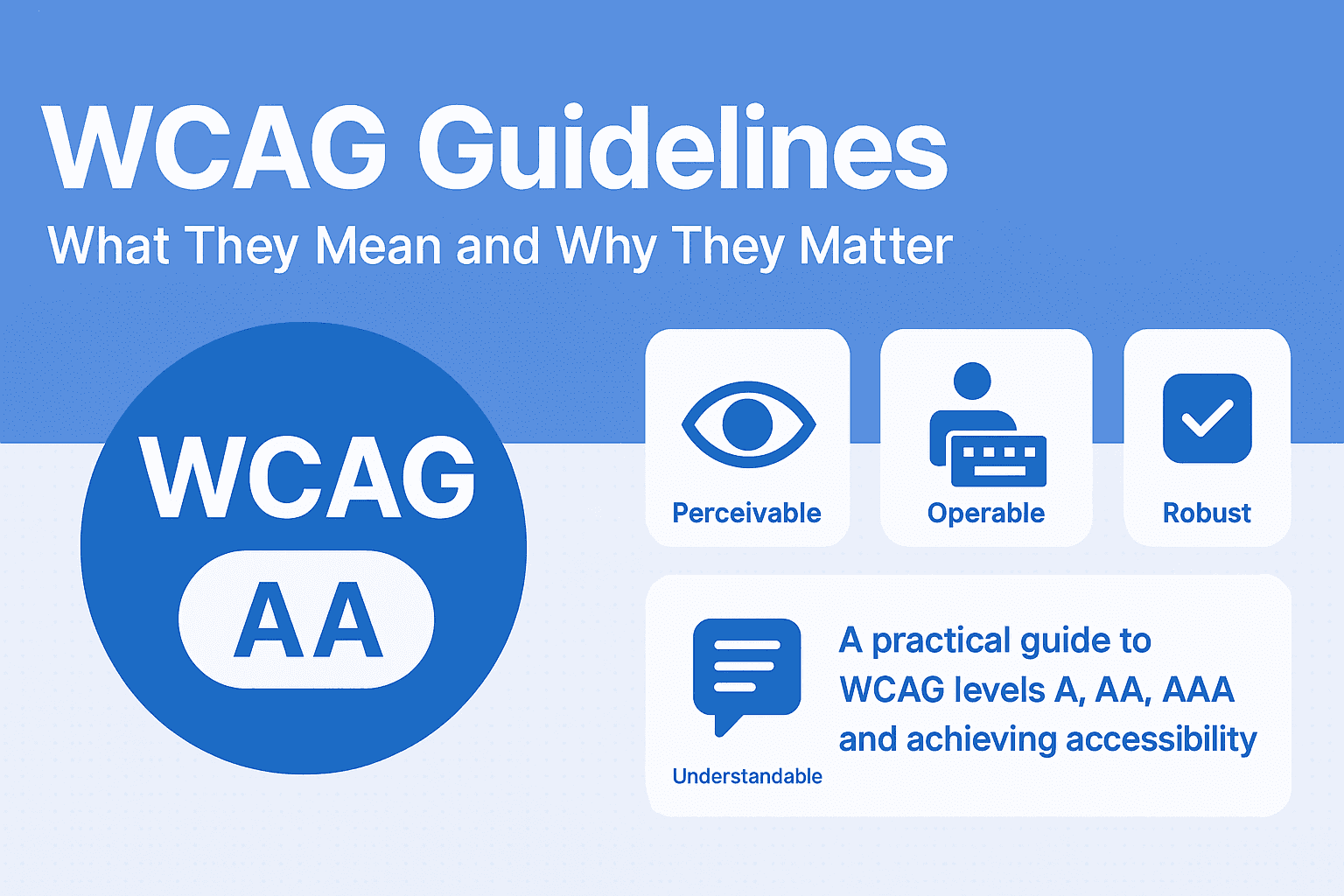
Digital accessibility is more than a trend — it's a necessity. As the internet continues to grow, ensuring that everyone can access and interact with online content is a fundamental responsibility of every business and organization. The WCAG AA standards play a crucial role in defining how accessible websites should be, setting the foundation for inclusivity and compliance with international laws.
In this comprehensive guide, we'll explore the structure of WCAG levels (A, AA, AAA), discuss how WCAG accessibility impacts users and organizations, and explain what achieving WCAG certification means for your business. By the end, you'll have a clear understanding of web accessibility standards and how to apply them effectively.
What Are WCAG Levels and Why They Matter
The Web Content Accessibility Guidelines (WCAG) were developed by the World Wide Web Consortium (W3C) under its Web Accessibility Initiative (WAI). These guidelines define a global standard for creating digital content that's accessible to everyone — including people with disabilities.
WCAG is built around four core principles, summarized by the acronym POUR:
- Perceivable – Information must be presented in ways users can perceive.
- Operable – Users should be able to navigate and use content easily.
- Understandable – Information and interface elements should be clear and predictable.
- Robust – Content must work with a wide range of assistive technologies.
To measure compliance, WCAG defines three levels of accessibility — Level A, Level AA, and Level AAA. Each level represents a deeper commitment to inclusivity and user experience.
WCAG Level A – The Basic Foundation of Accessibility
Level A is the most basic conformance level. It includes requirements that remove the most critical barriers preventing users from accessing content.
For example:
- Every image must have alternative text.
- Video or audio must include captions or transcripts.
- Navigation must be keyboard accessible.
- No flashing content that can cause seizures.
Achieving Level A compliance ensures that your website meets the absolute minimum accessibility standards. However, while this is a good starting point, it's not sufficient for full inclusivity or legal compliance in most regions.
WCAG AA – The Industry Standard for Accessibility Compliance
The Importance of WCAG AA
The WCAG AA level is widely considered the global benchmark for digital accessibility. Most organizations — from government websites to e-commerce platforms — aim to meet this level of conformance. It balances inclusivity, practicality, and technical feasibility.
At this level, websites are accessible to a broad range of users with disabilities, including those who rely on screen readers, speech recognition software, or alternative navigation devices.
Key WCAG AA Requirements
To meet WCAG AA, websites must build upon the Level A requirements with additional improvements, such as:
- Sufficient color contrast between text and background (minimum 4.5:1 ratio).
- Resizable text without loss of content or functionality.
- Clear focus indicators for keyboard users.
- Consistent navigation across all pages.
- Meaningful link text that clearly describes its purpose.
The WCAG AA level not only ensures accessibility but also enhances the overall user experience — making websites easier to read, navigate, and interact with for everyone.
Legal Implications of WCAG AA
Many accessibility regulations worldwide explicitly reference WCAG AA as the minimum compliance requirement, including:
- Americans with Disabilities Act (ADA) in the U.S.
- Section 508 of the Rehabilitation Act (U.S. federal websites).
- European Accessibility Act (EAA) in the EU.
- EN 301 549 standard for ICT accessibility in Europe.
- Accessibility for Ontarians with Disabilities Act (AODA) in Canada.
Failing to comply with WCAG AA can expose organizations to legal risks, lawsuits, or reputational damage. But more importantly, it can alienate millions of potential users.
WCAG AAA – The Highest Level of Accessibility
The AAA level represents the most comprehensive and stringent set of accessibility requirements. It's ideal for organizations that serve users who rely heavily on assistive technology, such as educational platforms, healthcare systems, or public service sites.
Examples of WCAG AAA Criteria:
- Enhanced contrast ratios (minimum 7:1 for normal text).
- Sign language interpretation for multimedia content.
- Simplified language for users with cognitive disabilities.
- Detailed error suggestions and prevention mechanisms.
While WCAG AAA is the gold standard of accessibility, it's not always practical to achieve for every piece of content. Most organizations focus on meeting WCAG AA while incorporating selected AAA techniques where feasible.
WCAG Accessibility: Creating Inclusive Digital Experiences
Why WCAG Accessibility Matters
WCAG accessibility ensures that every user — regardless of ability — can navigate, understand, and engage with your content. This includes users who are blind, deaf, color-blind, mobility-impaired, or neurodivergent.
Accessible design doesn't just benefit users with disabilities. It enhances usability for everyone — improving readability, mobile responsiveness, and search engine optimization (SEO).
The Business Case for WCAG Accessibility
- Wider Audience Reach: Over 1 billion people globally have disabilities. Accessibility opens your site to a larger audience.
- Improved SEO: Search engines favor accessible, well-structured websites.
- Enhanced Usability: Accessibility features make sites more user-friendly for all.
- Stronger Brand Reputation: Inclusive businesses are trusted and respected.
- Legal Compliance: Meeting WCAG accessibility standards reduces risk of litigation.
Accessibility Is Good Design
Many accessibility features overlap with good UX design principles — clear contrast, intuitive navigation, and concise content. Investing in WCAG accessibility means creating experiences that delight users rather than frustrate them.
WCAG Certification: Proving Your Commitment to Accessibility
Earning WCAG certification shows that your website meets the recognized global accessibility standards. It's not just a badge of compliance — it's a declaration of inclusion and quality.
What Is WCAG Certification?
WCAG certification involves a formal audit conducted by accessibility experts or third-party organizations. These audits evaluate your website against WCAG criteria and provide an accessibility conformance report.
Depending on the results, your organization can receive certification at the Level A, AA, or AAA standard.
Steps Toward WCAG Certification
- Accessibility Audit: Conduct an initial audit using both automated tools and manual testing.
- Remediation Plan: Fix identified issues, focusing on critical accessibility barriers first.
- Testing with Users: Include individuals with disabilities in usability testing.
- Documentation: Maintain detailed records of compliance efforts.
- Ongoing Monitoring: Regularly re-test your site after updates or design changes.
Benefits of WCAG Certification
- Builds trust with users and partners.
- Demonstrates corporate social responsibility.
- Protects your brand from accessibility-related lawsuits.
- Improves overall website performance and usability.
By achieving WCAG certification, you demonstrate that accessibility is not an afterthought — it's embedded in your organization's values and processes.
Web Accessibility Standards: The Global Benchmark for Digital Inclusion
The web accessibility standards set by WCAG serve as a global framework for inclusive design. They align with other accessibility initiatives such as:
- ISO/IEC 40500: The official international standard version of WCAG 2.0.
- ARIA (Accessible Rich Internet Applications): Enhances accessibility of dynamic content.
- ATAG (Authoring Tool Accessibility Guidelines): Helps developers create accessible tools.
Together, these web accessibility standards ensure that digital environments are built for everyone — not just the majority.
Aligning Your Business With Web Accessibility Standards
To fully comply with web accessibility standards, organizations should:
- Incorporate accessibility into every stage of design and development.
- Train employees on accessible content creation.
- Use accessible templates, plugins, and frameworks.
- Commit to continuous improvement — accessibility is an evolving process.
By doing so, you not only meet WCAG AA requirements but also future-proof your digital presence.
How to Get Started With WCAG AA Compliance
Implementing WCAG AA may seem challenging, but with the right approach, it's entirely achievable.
Step 1: Assess Your Current Accessibility Level
Use online tools like WAVE, axe DevTools, or Google Lighthouse to identify basic accessibility issues.
Step 2: Fix the Basics
Address critical Level A issues first — missing alt text, poor color contrast, and inaccessible forms.
Step 3: Upgrade to WCAG AA
Enhance usability and accessibility by improving structure, navigation, and interactive elements.
Step 4: Test With Real Users
Engage users with disabilities for hands-on testing to ensure real-world usability.
Step 5: Maintain and Monitor
Accessibility is ongoing — regularly test and update your content to stay compliant with evolving web accessibility standards.
Why WCAG AA Is the Standard for Modern Accessibility
The WCAG AA guidelines represent more than just compliance — they're the foundation of a truly inclusive digital world.
By prioritizing WCAG accessibility, working toward WCAG certification, and following web accessibility standards, businesses not only comply with legal requirements but also demonstrate genuine care for their users.
In an increasingly digital society, accessibility equals opportunity. Every improvement made toward WCAG AA compliance brings the web one step closer to being a space where everyone can connect, learn, and thrive — equally.
Quick Questions
Tap to ask AI about this article