Digital Accessibility Consulting: The Complete Guide

Sidharth Nayyar
Digital Accessibility Consulting: The Complete Guide
Making a website truly accessible is rarely a one-person job. Digital accessibility consulting brings in expert guidance to find barriers, fix them, and build the know-how to keep your site inclusive for the long haul. This guide explains exactly what consulting involves, what it costs you in time, how audits and remediation work, the standards a good partner helps you meet, and how to choose the right firm.
TL;DR: A digital accessibility consultant audits your site (using both automated tools and manual expert testing), guides remediation, maps your work to the standards that apply to you (WCAG, ADA, Section 508, EAA, AODA), and helps you build a lasting culture of accessibility. For the best outcome, pair expert consulting with modern technology and continuous monitoring.
What Is Digital Accessibility Consulting?
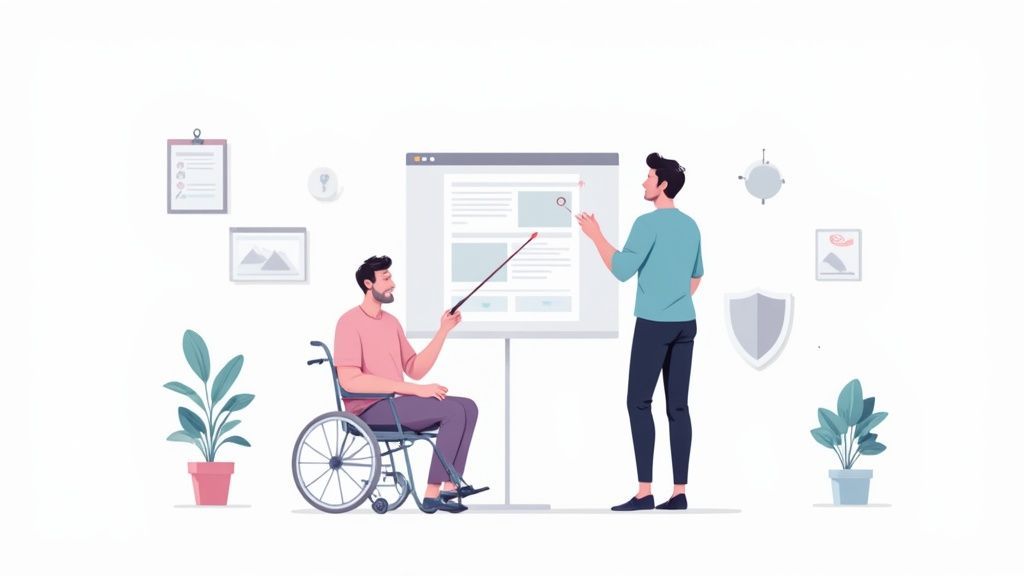
Digital accessibility consulting is expert guidance that helps organizations make their websites, apps, and digital products usable by people with disabilities. Rather than a simple pass/fail grade, it's a collaborative engagement: consultants identify the sticking points, create clear fixes, and equip your team to sustain accessibility well after the project ends.
These consultants provide everything from audits and user testing to strategic advice, helping you meet crucial standards like the Web Content Accessibility Guidelines (WCAG) and comply with laws like the Americans with Disabilities Act (ADA).
I like to think of a digital accessibility consultant as an architect for your online presence. An architect makes sure a physical building is safe, functional, and easily navigated by someone using a wheelchair. In the same way, an accessibility consultant ensures your website is built to welcome every visitor, no matter how they access the internet. If you're new to the topic, our guide on what is web accessibility is a great place to start.
This isn't just about ticking off compliance boxes. It's a smart, proactive approach to growing your business.
A Partnership For Inclusive Growth
Bringing in a consultant is about so much more than just fixing errors on a checklist. It's a genuine collaboration designed to weave accessibility into the very fabric of your company's culture and workflow.
When you take this kind of proactive approach, something interesting happens: you build a better product for everyone. An inclusive design—one that considers the needs of all users from the start—almost always results in a more intuitive, streamlined, and enjoyable experience for your entire audience.
A consultant’s role is to transform accessibility from a technical hurdle into a strategic advantage, ensuring your digital doors are open to the widest possible audience.
Understanding The Consultant's Value
To get a better sense of what these experts bring to the table, it helps to look at a similar field. Consider what marketing consultants do and their overall worth; they bring in specialized knowledge to solve a specific, complex business problem. Accessibility consultants do the same.
They provide a clear roadmap for navigating thorny legal requirements, protecting your brand from risk, and unlocking new market segments you might have been unintentionally excluding. In the long run, this investment fosters incredible brand loyalty and is a critical move for any forward-thinking business.
This table breaks down the typical services provided by digital accessibility consultants, giving you a clear picture of what a partnership entails.
Core Services In Digital Accessibility Consulting
| Service Area | Description | Primary Goal |
|---|---|---|
| Accessibility Audits | A comprehensive review of your website or app against standards like WCAG 2.1 AA, using both automated tools and manual testing. | To identify all accessibility barriers and create a clear remediation plan. |
| Remediation Support | Hands-on guidance for developers and designers to fix the issues discovered during an audit, including code suggestions and best practices. | To ensure fixes are implemented correctly and efficiently, preventing future issues. |
| Strategic Planning | Developing a long-term accessibility policy, roadmap, and governance model for your entire organization. | To embed accessibility into the company culture and product lifecycle. |
| Training & Workshops | Educating teams—from designers to content creators—on accessibility principles, techniques, and their role in maintaining compliance. | To build in-house expertise and make accessibility a shared responsibility. |
| Usability Testing | Conducting tests with users who have various disabilities to gather real-world feedback on how they experience your digital product. | To move beyond technical compliance and ensure a genuinely usable and positive user experience. |
Ultimately, these services work together to create a digital presence that is not just compliant, but truly inclusive and effective for all users.
Why Investing in Accessibility Consulting Is a Game-Changer
Accessibility is both an ethical imperative and a business advantage. Consulting reduces legal risk under laws like the ADA, expands your addressable market to the large population of users with disabilities, strengthens brand reputation, and improves overall user experience and SEO. Done well, it turns a compliance obligation into a growth opportunity.
This isn't a cost center; it's an investment that turns a potential risk into a genuine competitive edge. You'll build fierce customer loyalty and earn a reputation as a forward-thinking leader who actually cares about inclusive values.
Tap Into a Huge, Overlooked Market
Think about this: globally, about one in six people live with a disability. That's a massive slice of the population that most businesses are accidentally shutting out. If your website or app isn't built for them, you're essentially putting up a "closed" sign for millions of potential customers who want to buy from you.
Accessibility consulting bridges that gap. By making your digital world usable for everyone, you open up a direct channel to a loyal market with significant spending power. This isn't just about doing the right thing; it's a clear-cut strategy for growing your market share and boosting revenue.
Make the User Experience Better for Everyone
Here’s something that might surprise you: designing for accessibility improves the experience for all your users, not just those with disabilities. A website that's a breeze for a screen reader to navigate is also incredibly clear and logical for someone without a visual impairment. Think about video captions—they’re essential for users who are deaf or hard of hearing, but they're also a lifesaver for anyone watching in a loud coffee shop or a quiet office.
An accessible digital experience is simply a better digital experience. When you solve for the most complex user challenges, you end up creating a more intuitive, efficient, and enjoyable journey for your entire audience. The natural result? Higher engagement and better conversion rates all around.
Get a Serious SEO Boost
It turns out that what's good for accessibility is also fantastic for search engines. Google's main goal is to serve up the most useful and user-friendly content, and its web crawlers "see" your site in a way that's surprisingly similar to how assistive technologies work.
An accessible website is naturally packed with features that Google's algorithm loves:
Logical Heading Structures: Proper H1s, H2s, and H3s create a clean outline that tells both screen readers and search engines what your content is about and which parts are most important.
Descriptive Alt Text:Writing good alt text for your images gives crucial context to visually impaired users and feeds search engines valuable keywords about your visuals.
Clean Code and Fast Load Times: The well-structured, semantic HTML needed for accessibility almost always results in a leaner, faster-loading website—a huge ranking factor.
Transcripts and Captions: Providing transcripts for your audio and video not only makes them accessible but also gives search engines a ton of indexable text to crawl.
By investing in accessibility, you're simultaneously shoring up your technical SEO, which can lead to better rankings and more organic traffic.
Build Your Brand Reputation and Earn Real Loyalty
In today's market, people don't just buy products; they buy into brands and their values. Showing a real commitment to inclusion is a powerful way to stand out. It sends a loud, clear message: your company cares about people and is dedicated to creating fair experiences for everyone. That kind of trust builds a deep customer loyalty that you just can't buy with marketing alone.
Despite how important it is, most of the web is still falling short. Recent studies show that a vast majority of the world's top websites have accessibility failures, creating barriers for nearly 1.3 billion people worldwide. Stepping up to fix this problem doesn't just put you in a small minority; it positions your brand as a true leader. In the same way that understanding the impact of expert B2B marketing consultants can show the value of specialized expertise, investing in accessibility consulting helps you stand out and win.
TLDR: Working with a digital accessibility consultant is a clear, four-step process. It kicks off with a Discovery call to set your goals, then moves into a deep-dive Audit using both automated tools and human testing. After that, you get a practical Remediation Plan that tells you what to fix first. The journey wraps up with Training and Empowerment, giving your team the skills to keep your site accessible for good.
Inside the Process: Accessibility Audits and Remediation
Once you bring in a consulting firm, the journey starts with an audit and leads straight into remediation. An audit is a full health checkup for your site - not a single quick scan, but a deep investigation designed to uncover every barrier a user with disabilities might face. It then becomes the foundation for everything that follows.
The two-pronged audit approach: an effective audit blends technology with human expertise. Consultants first run automated scanning tools to sweep for common, code-level errors - like a spell-checker for accessibility, flagging missing alt text or poor contrast. They then layer in manual expert testing (keyboard navigation, screen reader experience, and judgment-based criteria) to catch what automation can't. Remediation is the structured follow-up: fixing the issues, prioritizing by severity, and transferring knowledge so your team can maintain accessibility.
Phase 1: Discovery and Scoping
Every great partnership starts with a conversation. The first step is a discovery call, where the consultant gets to the heart of what you want to achieve. Are you trying to meet legal standards, break into a new market, or just make your user experience better for everyone? This is where you both agree on what success looks like.
From there, the consultant will get a handle on the scope of your digital assets. They’ll look at how big and complex your website or app is to figure out the work involved. This initial groundwork is all about making sure everyone is on the same page about goals, timelines, and what gets delivered before any of the technical work kicks off.
Phase 2: Audit and Assessment
This is where the real deep-dive analysis begins. Consultants use a powerful one-two punch to uncover every accessibility barrier, ensuring nothing slips through the cracks. This dual approach is essential because automated tools and human testers catch very different kinds of problems.
Automated Scanning: Specialized software zips through your website’s code, quickly flagging common, black-and-white violations like missing alt text on images or poor color contrast. Think of this as the high-level survey that catches the obvious technical issues.
Manual Testing: This is where the human touch comes in. Experts navigate your site using the exact same assistive technologies that people with disabilities rely on, like screen readers or keyboard-only navigation. This is how they find the subtle, real-world usability frustrations that automated tools will always miss.
Combining these two methods gives you the full picture of where you stand. If you want to dig deeper into this process, you can learn more about what a complete web accessibility audit involves and why it's so important.
Phase 3: Prioritization and Remediation Plan
Once the audit is done, you’ll get a report, but a great consultant gives you far more than just a list of what’s broken. They deliver an actionable remediation plan. This is the strategic document that translates all those technical findings into clear, prioritized steps your development team can actually follow.
A consultant’s true value isn’t just in finding problems, but in providing a clear, manageable roadmap to solve them. They help you focus on the most critical fixes first, ensuring maximum impact with efficient effort.
Issues are usually sorted by severity—from critical "showstoppers" that completely block a user to minor hiccups that can be fixed later. This prioritization helps your team tackle the biggest barriers first, so you can make meaningful progress right away. This plan becomes your playbook for achieving compliance and a genuinely better user experience.
The infographic below shows how these kinds of strategic investments in accessibility pay off in real business benefits.
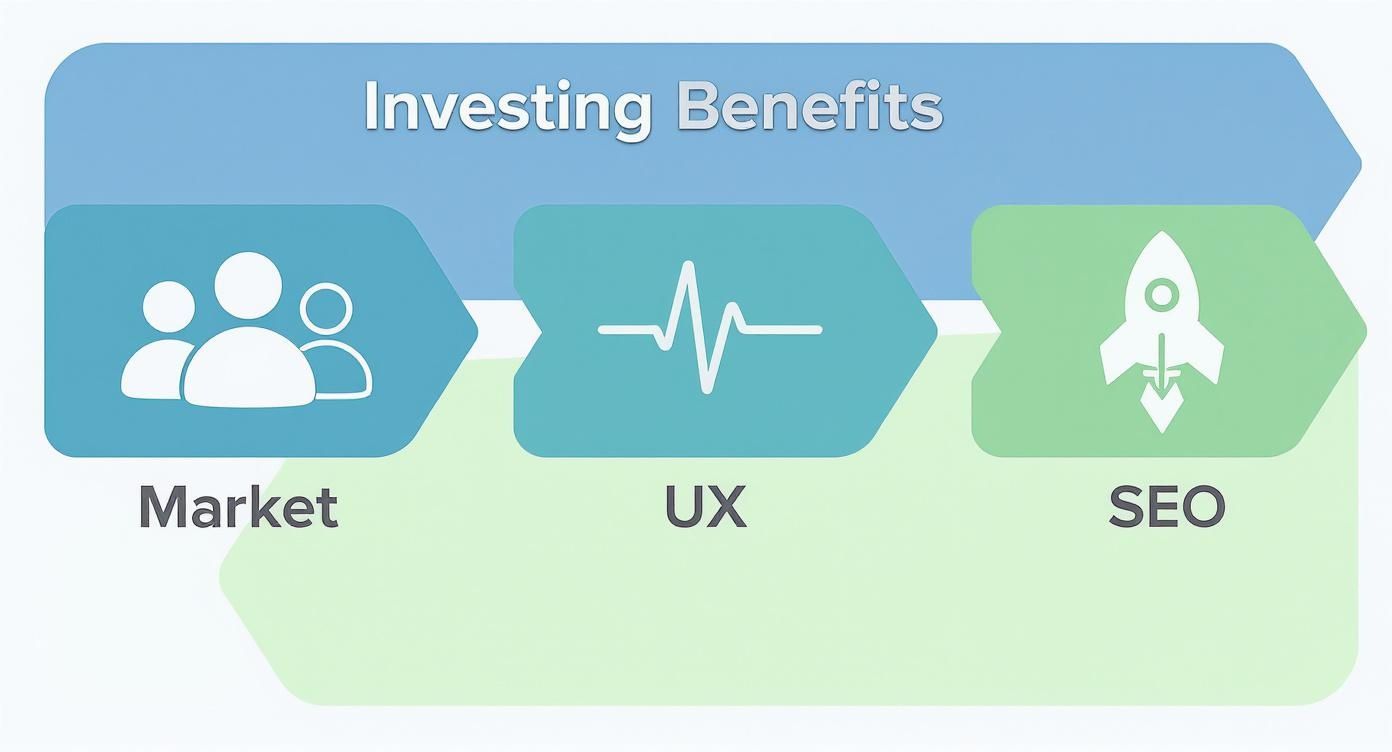
As you can see, improving accessibility directly helps you reach a wider audience, create a better experience for all users, and even give your SEO a boost.
Phase 4: Training and Empowerment
The final phase might just be the most important one because it’s all about the long game. The goal of a top-tier consultant isn't just to patch up your current website; it's to empower your team to build inclusively from the ground up, forever.
Consultants will often run customized training sessions for your designers, developers, and content writers, teaching them the core principles of accessible design and coding. This knowledge transfer is what turns accessibility from a one-time fix into a core part of your company culture. By giving your team these skills, you ensure your digital products stay accessible long after the consultant’s work is done.
TLDR: Think of this as hiring a partner, not just a vendor. The best consultants mix automated scans with real, human testing. Check their portfolio for experience in your industry, and make sure they’re focused on training your team so accessibility becomes a permanent part of how you work.
Navigating Global Accessibility Standards
Accessibility is shaped by global standards and local laws that, together, form a surprisingly unified framework - and a good consultant is your guide through it. At the center is the Web Content Accessibility Guidelines (WCAG) from the W3C: not a law itself, but the technical blueprint nearly every accessibility law points back to. A consultant maps WCAG conformance to the specific regulations that apply to you, such as the ADA (United States), Section 508 (US federal), the European Accessibility Act (EAA), and AODA (Ontario, Canada).
How to Choose the Right Accessibility Partner
Evaluate prospective partners on:
- Proven expertise with WCAG and the laws relevant to your market.
- A blended methodology combining automated scanning with manual expert testing.
- Clear, prioritized remediation guidance - not just a list of problems.
- Knowledge transfer that upskills your team rather than creating dependence.
- A long-term, collaborative mindset focused on sustained accessibility.
Picking a digital accessibility consultant is a big deal. You’re not just buying a one-off audit; you're bringing in a guide to help weave inclusivity into the fabric of your company. The right partner won't just find problems—they'll teach your team how to avoid them in the future.
This decision is more important than ever. The global market for accessibility consulting is already valued between USD 500 million and USD 1 billion, and it's expected to balloon to over USD 3 billion by 2030. This boom is fueled by increasing legal requirements and a genuine shift toward corporate responsibility. Finding a partner who truly gets it is crucial.
Look for Deep Technical and Industry Expertise
First things first: your potential partner needs to know their stuff, inside and out. They should live and breathe the technical standards, especially WCAG 2.1 AA, and be well-versed in laws like the ADA and Section 508. Don't hesitate to drill down and ask them about their direct experience navigating these regulations.
But technical chops are only half the story. Look for someone who has worked in your industry before. The accessibility hurdles for an e-commerce giant are completely different from those for a patient portal or a government website. A consultant who already understands your world can offer insights that are immediately relevant and practical.
Insist on a Balanced Testing Methodology
A solid accessibility audit isn't just about running a piece of software. Many solutions are available, from comprehensive managed services to automated scanning tools and simple widgets.
Automated scans are great for a first pass. They can quickly flag a portion of common accessibility errors. But they can’t tell you what it’s actually like for someone to use your site with a screen reader. Only a human can do that.
The best firms use a two-pronged approach that gives you the full picture:
Automated Tools: These are used to sweep your site for widespread, code-level bugs. It’s the efficient, broad-strokes part of the audit.
Manual Testing: This is where the real magic happens. Experts use assistive technologies—screen readers, keyboard-only navigation, screen magnifiers—to experience your site just as a person with a disability would. This is how you find the nuanced, frustrating barriers that automated tools may not catch.
This hybrid model ensures you’re not just checking boxes for compliance, but are actually creating a usable and welcoming experience for everyone.
Vet Their Track Record and Focus on Empowerment
Don’t just take their word for it—ask to see their work. A reputable consultant will have case studies, client testimonials, and references ready to go. Look for stories from companies like yours, and pay attention to how they helped guide the remediation process, not just how they identified the problems.
Ultimately, a great consultant wants to work themselves out of a job. Their goal should be to build your team's skills so you can maintain accessibility on your own. This is all about knowledge transfer. A true partner will offer training sessions for your developers, designers, and content creators, making accessibility a sustainable part of your culture.
When you're talking to potential partners, ask them straight up: "How will you make my team smarter?" For more on building a compliant digital presence, check out our guide on ADA website compliance services.
TLDR: Think of accessibility not as a one-time fix, but as a permanent part of your company's DNA. This means getting real support from leadership, weaving accessibility checks into every step of your product's journey, and empowering a team of internal "Accessibility Champions" to keep the momentum going. The goal is to make inclusive design an automatic, everyday habit for everyone.
Pairing Expert Consulting with Modern Technology
Consulting and technology are strongest together. Human experts provide the judgment and strategy automation can't; tools provide speed, scale, and continuous coverage between engagements. Pairing a consultant's roadmap with a platform like WebAbility.io - which offers automated monitoring and a user-facing accessibility widget - keeps your site compliant and inclusive as it evolves, rather than drifting out of conformance after the audit.
Building a Lasting Culture of Accessibility
Building a Lasting Culture of Accessibility
The goal of consulting isn't a one-time certificate; it's making accessibility a reflex. Embed accessible practices into your design and development workflow, train your team, assign ownership, and treat accessibility as an ongoing commitment. That cultural shift is what keeps the gains from a consulting engagement alive.
A great digital accessibility consulting project doesn't just deliver a final report and walk away. The real win is when accessibility stops being a project and becomes a permanent part of how your company operates—ingrained in your culture and your DNA.
This final, crucial step is all about moving from a reactive, fix-it-when-it-breaks mindset to a proactive, continuous practice. It’s about fundamentally changing how your teams think, design, and build every single day until accessibility is no longer an afterthought but a core principle.
Secure Genuine Leadership Buy-In
Let's be clear: real cultural change has to start at the top. Without genuine, vocal support from your leadership, even the best accessibility initiatives will eventually lose steam and be treated as optional side projects.
Leaders need to do more than just sign off on a budget. They have to become champions for the cause, consistently talking about why accessibility matters for the business, for your customers, and for your brand. This top-down reinforcement is what gives accessibility the priority it needs, ensuring it gets resources and a permanent spot on project roadmaps.
Integrate Accessibility into the Product Lifecycle
To make accessibility a lasting habit, it has to be part of your existing workflow, not an extra step tacked on at the end. An experienced consultant will show you how to embed accessibility checks into every stage of your product development lifecycle.
This is often called the “shift-left” approach, and it’s about thinking about inclusion from the very beginning.
Design: Accessibility isn't an overlay; it's part of the initial blueprint. Think clear color contrast, logical layouts, and intuitive navigation right from the first wireframe.
Development: Your developers start writing clean, semantic HTML and following ARIA best practices from day one, not as a clean-up task before launch.
QA Testing: The QA team doesn’t just test for bugs. They make manual testing with screen readers and keyboard-only navigation a standard part of their process.
Content Creation: Your writers and marketers are trained to create accessible content from the start, like adding meaningful alt text to images and using proper headings.
By building accessibility into each phase, you catch problems early when they’re easy and cheap to fix, creating better, more robust products from the ground up.
Create and Empower Accessibility Champions
You can't expect one person or a small team to be the sole owner of accessibility. The most effective way to spread the responsibility is to build a network of internal Accessibility Champions. These are people from all corners of your company—design, engineering, marketing, HR—who are passionate about inclusion.
Give them some extra training, and they become the go-to experts and advocates within their own teams.
Champions act as a bridge between high-level accessibility goals and the day-to-day work happening on the ground. They answer questions, share what they know, and keep the energy alive long after the consultants have left.
These are your grassroots leaders. They make conversations about accessibility normal and drive progress from within. By supporting these champions, you build a sustainable, self-managing culture where the commitment to inclusion doesn't just survive—it thrives.
Frequently Asked Questions About Accessibility Consulting
How long does an accessibility audit take?
It depends on the size and complexity of your site. A smaller marketing site with a few unique layouts can usually be audited thoroughly in about 2 to 4 weeks; large, complex applications take longer.
What is the difference between an accessibility audit and remediation?
An audit identifies the barriers (via automated scanning plus manual expert testing); remediation is the follow-up work of fixing them and equipping your team to maintain accessibility.
How do I choose the right accessibility consulting partner?
Look for proven WCAG and legal expertise, a blended automated-plus-manual methodology, clear remediation guidance, knowledge transfer to your team, and a collaborative, long-term approach.
Can technology replace an accessibility consultant?
No. Automated tools catch common code-level issues quickly but can't judge keyboard flow, screen reader experience, or context. The best results pair expert consulting with modern tools and continuous monitoring.
Which accessibility standards will a consultant help me meet?
Most consulting centers on WCAG and maps it to the laws that apply to you - such as the ADA, Section 508, the European Accessibility Act, and AODA.
Conclusion
Digital accessibility consulting gives you expert eyes, a clear remediation roadmap, and a path to lasting compliance. Choose a partner who blends automated and manual testing, knows the standards that apply to you, transfers knowledge to your team, and pairs their expertise with technology. That combination turns accessibility from a worry into a durable competitive advantage.
At WebAbility.io, we bring together powerful, AI-enhanced tools and expert human guidance to put accessibility within reach for any organization. Our platform provides continuous monitoring and automated fixes, while our team delivers the strategic support you need to build a genuinely inclusive digital presence. Start your journey toward a more accessible future with WebAbility.io.
Quick Questions
Tap to ask AI about this article